
If you run a furniture brand, design studio or property development business in Europe, choosing where to manufacture is one of the biggest decisions you will make. Production costs, quality, lead times and communication all depend on it.
More European companies are now looking at the Baltic states: Latvia, Lithuania and Estonia, as an alternative to both Western European factories and Asian suppliers. Here are five practical reasons why.
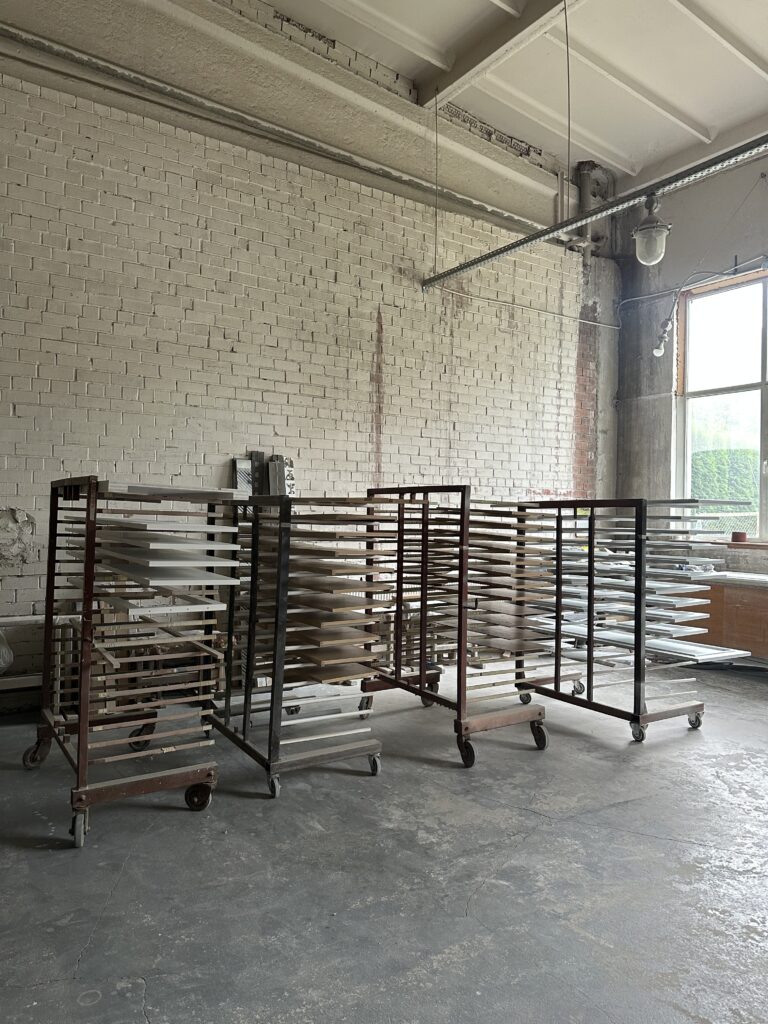
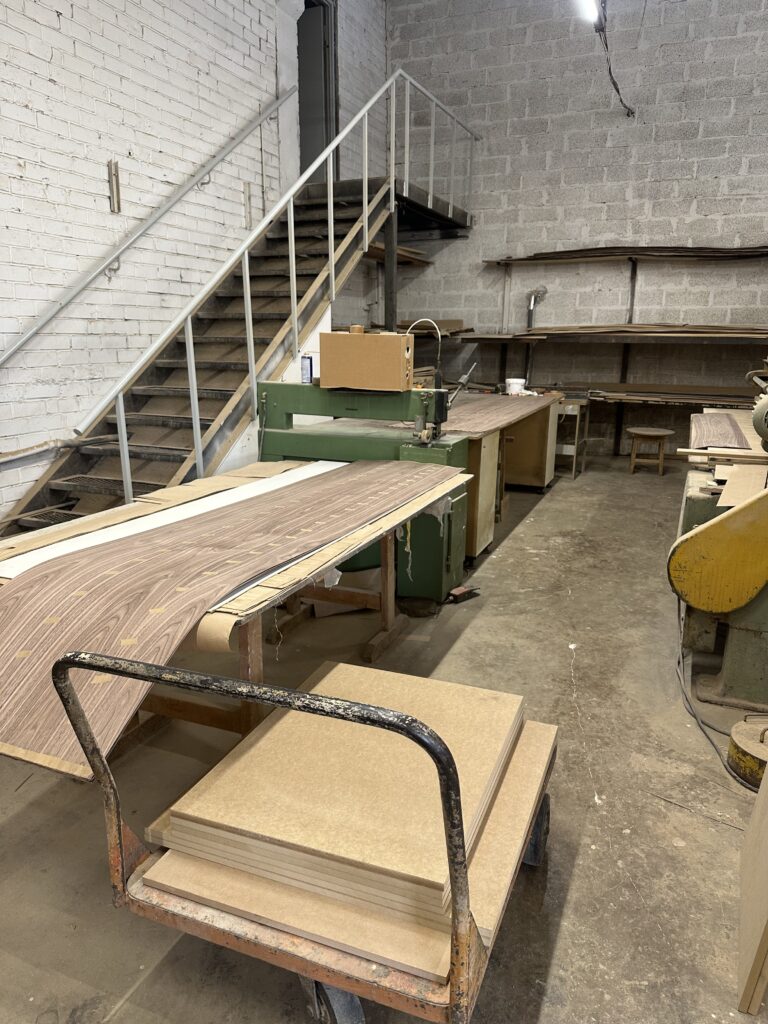
1. Lower production costs than Central and Western Europe
Labour is the largest cost in custom furniture production, and this is where the Baltics stand out.
According to Eurostat’s 2025 figures, average hourly labour costs were €16.30 in Latvia and €17.80 in Lithuania, less than half the EU average of €34.90, and roughly a third of the levels in Denmark (€51.70) or the Netherlands (€47.90).
In practice, this means a fitted wardrobe, kitchen or panelled interior produced in a Latvian factory can cost significantly less than the same piece made in Germany or Scandinavia, without the shipping times, customs procedures and quality risks that come with sourcing from outside the EU.
Lower cost does not mean lower standards. Baltic factories work with the same materials, hardware and finishing systems as their Western European counterparts, often supplied by the same manufacturers.
2. A deep-rooted furniture manufacturing tradition
Woodworking is not a new industry in the Baltics. It is one of the region’s oldest trades. Forests cover 53% of Latvia’s territory, making it one of the most forested countries in the EU, and the forestry, woodworking and furniture sector accounts for a substantial share of the country’s exports.
For decades, Baltic factories have produced furniture for Scandinavian and Western European brands, many of them under private label agreements. That history matters: it means experienced joiners, CNC operators and production managers who understand European quality expectations, tolerances and finishing standards.
Today, that craftsmanship tradition is combined with modern equipment. Most established factories run CNC machining centres, edge-banding lines and spray-finishing facilities that match what you would find in Germany or Denmark.
3. Close to your market: hours, not weeks
Distance is one of the most underestimated factors in choosing a manufacturing partner. When something needs to be discussed at the factory, seeing it in person beats a video call every time.
From Riga, a direct flight to Stockholm takes about 1 hour 10 minutes, and Copenhagen is around 1 hour 25 minutes away. Berlin, Amsterdam and Helsinki are all reachable in a morning. You can visit the factory, review samples and be home for dinner.
Logistics follow the same logic. Road freight from Latvia typically reaches Germany, Poland or Scandinavia within two to three days. Compare that with 6–10 weeks of sea freight from Asia, plus port handling and customs clearance, and the difference in flexibility becomes clear, especially for project-based work where site deadlines shift.
4. Shared working culture with Scandinavia and the DACH region
Manufacturing partnerships fail more often over communication than over price. This is where the Baltics offer a quieter but equally important advantage.
Baltic business culture is close to that of Scandinavia and the DACH countries: direct communication, punctuality, written agreements that are kept, and a low-drama approach to problem-solving. English is widely spoken in export-oriented factories, and many teams also work in German, Swedish or Russian.
All three Baltic states are EU and eurozone members. You work under EU contract law, EU consumer and product standards, and invoice in euros, with no customs duties, import VAT complications or currency risk. For brands used to sourcing from further afield, this removes a whole layer of administrative friction.
5. Sustainable, locally sourced materials
Sustainability is no longer a marketing extra. For many brands, architects and developers it is a procurement requirement.
The Baltics are well positioned here. Factories source timber locally from some of Europe’s most extensive and actively managed forests, and FSC-certified material is widely available as standard. Short transport distances between forest, sawmill and factory keep the carbon footprint of production low compared with intercontinental supply chains.
For companies that need to document the origin of their materials, whether for certification schemes, public tenders or their own sustainability reporting, a transparent, single-region supply chain is far easier to audit than one that spans continents.
Choosing the right production partner
The Baltics offer a rare combination: Western European quality standards and legal certainty at a meaningfully lower cost, close enough to visit in a morning.
The practical challenge is finding the right factory, one with the right machinery, capacity and communication for your specific products. That is exactly what we do at Gauya Furniture. We connect brands, architects, interior designers and developers with trusted, vetted factories in Latvia, and manage the project from design and prototyping through to production, delivery and installation.